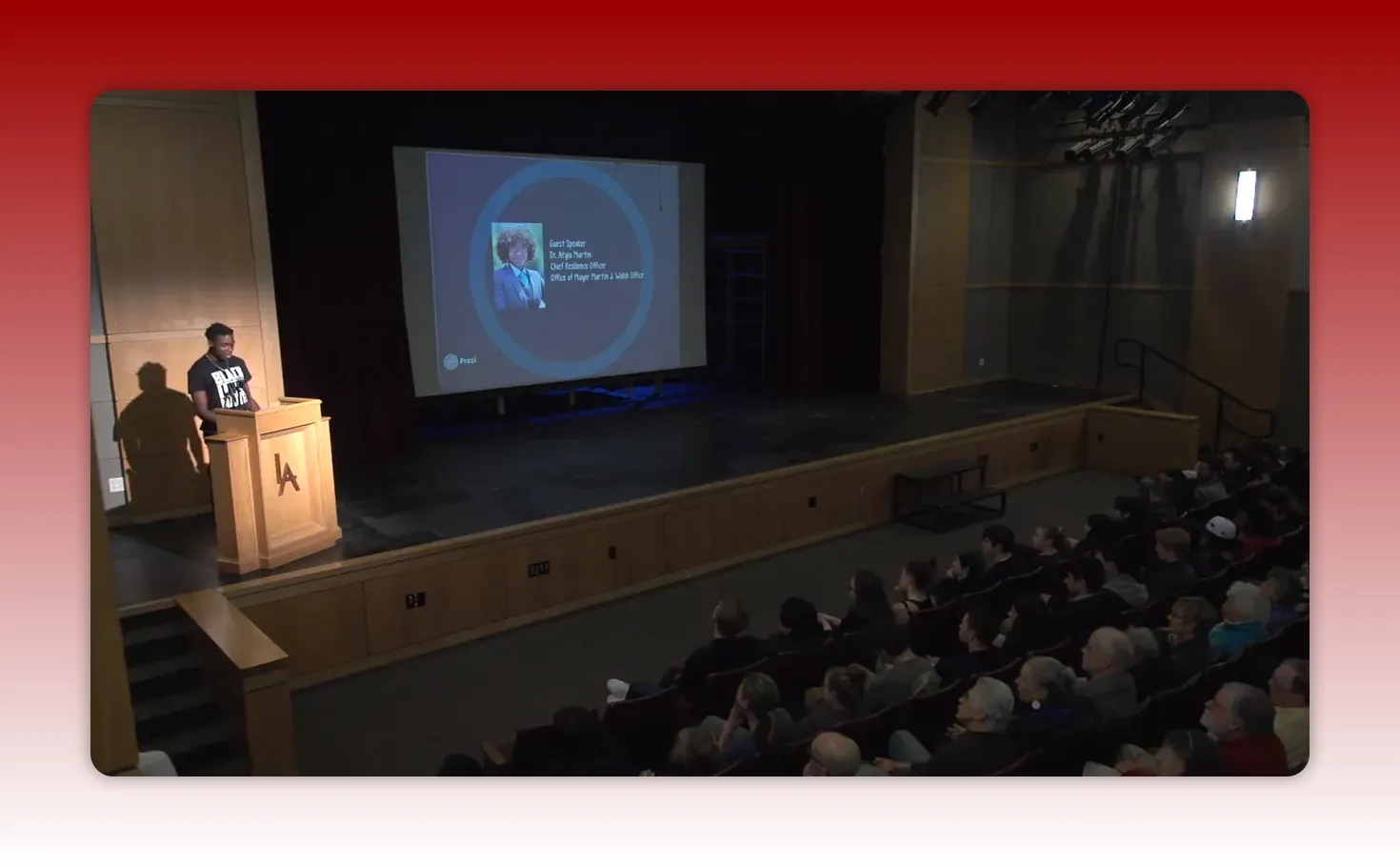
Source: Based on a Prompt about Dr. Atyia Martin to Google Gemini's Deep Research
Section 1: A Profile in Convergence
The career and intellectual contributions of Dr. S. Atyia Martin represent a significant convergence of four historically siloed professional domains: national security, public health preparedness, emergency management, and racial justice. An analysis of her professional trajectory and published work reveals a figure who has systematically applied the rigorous analytical frameworks of intelligence and security to the complex, systemic challenges of social inequity. Her work is built on the foundational concept that community resilience—the capacity to prepare for, withstand, and recover from shocks and stresses—is fundamentally unattainable without first addressing underlying racial and social inequities. This perspective, which reframes racial justice not as an adjunct to resilience but as its essential precondition, constitutes her primary and most impactful contribution to both theory and practice.
Dr. Martin's personal mission, "to unleash the invisible power that every person and organization has to intentionally act to disrupt oppression," serves as the unifying thread across a diverse career spanning the U.S. Air Force, the National Security Agency (NSA), the Federal Bureau of Investigations (FBI), the Boston Police Department (BPD), the Boston Public Health Commission (BPHC), and the Mayor's Office for the City of Boston.1 This mission achieved its most prominent public application during her tenure as Boston's first Chief Resilience Officer (CRO). In this role, she led Boston to become "the first city actually in the world" within the 100 Resilient Cities network to "explicitly say that racism is a challenge that's impacting every single aspect of resilience from social, to economic, environmental".2 This deliberate centering of racial equity was not a later addition to her work but a core principle established at the outset of her tenure, defining it as the city's "main resilience challenge".3
Her approach is distinguished by the fusion of practice and theory. Dr. Martin's intellectual frameworks are not the product of academic abstraction but were forged through direct, high-stakes professional experience. Her progression from hands-on roles as an intelligence analyst and homeland security supervisor to strategic positions as a policy architect and CEO demonstrates a clear pattern: her theories are the codification of "researched and tested experiential learning approaches".4 Her academic publications, such as the analysis of the public-private partnership response to the Boston Marathon Bombings, directly examine events she was professionally involved in managing, solidifying her status as a rare practitioner-theorist whose work is validated by both field experience and scholarly rigor.5
Furthermore, a deeper analysis suggests an implicit repurposing of national security methodologies. The core functions of intelligence analysis—threat assessment, vulnerability mapping, and systems thinking—are foundational to her early career in the NSA, FBI, and BPD.6 In her later work, she applies this same analytical lens to a different threat landscape. Systemic racism becomes the critical threat, and marginalized communities are understood as possessing systemic vulnerabilities. By identifying "disproportionate burdens on communities of color" as the city's primary resilience challenge, she effectively treats social inequity as a matter of collective security, arguing that the entire community's ability to thrive is compromised by these underlying fissures.3
Section 2: The Professional Trajectory: From National Security to Social Transformation
Dr. Atyia Martin's career follows a distinct evolutionary arc, with each professional stage providing the essential skills, experiences, and insights for the next. This trajectory demonstrates a progressive movement from the structured, analytical world of national security to the complex, human-centered domains of public health and, ultimately, to a holistic, systems-level approach to social transformation.
2.1 Foundations in Intelligence and Security (c. 1990s - 2008)
Dr. Martin's early career was rooted in the fields of intelligence and national security, where she developed the core analytical competencies that would define her later work. Her service began as a Serbian/Croatian linguist and analyst on active duty with the U.S. Air Force, assigned to the National Security Agency.4 She subsequently served as a civilian in the Boston Field Intelligence Group of the FBI and later joined the Boston Police Department's Boston Regional Intelligence Center (BRIC), where she rose from Senior Analyst to Homeland Security Supervisor and Acting Director.6
In these roles, she was responsible for conducting intelligence analysis and, critically, for developing the foundational policies and procedures for one of the nation's first local intelligence fusion centers.4 This early work in building new institutional structures for information sharing and threat analysis provided her with a deep understanding of complex systems and inter-agency collaboration. Her high level of performance during this period is evidenced by numerous accolades, including the National Security Agency Star Achievement Award (2005), the U.S. Department of Defense Joint Service Achievement Medal (2005), and the Boston Police Department Distinguished Service Award (2008).7 These honors underscore her proficiency in the demanding and highly analytical environment of national security.
2.2 Leadership in Public Health Preparedness (c. 2009 - 2015)
Dr. Martin's transition into public health marked a pivotal shift, applying her security and systems-planning expertise to the well-being of the community. She first served as a regional planner for the City of Boston's Mayor's Office of Emergency Management, where she coordinated critical infrastructure projects and managed public-private partnerships.6 This role served as a bridge to her subsequent position as the Director of the Office of Public Health Preparedness (OPHP) at the Boston Public Health Commission (BPHC), a role she held from 2011 to 2015.6 At the BPHC, she was responsible for the strategic direction of Boston's public health and healthcare resilience, preparedness, mitigation, response, and recovery efforts.8
Her leadership was tested and proven during the city's response to the 2013 Boston Marathon Bombings. In a 2014 interview, she detailed her role as the Medical Intelligence Center Manager, on the day of the attack.9 From this position, she coordinated a multi-agency response that included hospitals, Boston EMS, the Boston Police Department, the American Red Cross, and mental health providers.9 Her team was responsible for tracking approximately 164 patients transported from the scene and, within three hours of the bombing, establishing a community drop-in center to provide psychological support and assistance to displaced runners and residents.9 This experience appears to have been a catalyst, providing a stark, real-world demonstration of how pre-existing social vulnerabilities are acutely exposed and exacerbated during a crisis. The immediate need to address not just physical injuries but also psychological trauma and displacement for those without resources provided a tangible manifestation of the concepts she would later formalize in her academic work on the social determinants of vulnerability.5 Her innovative contributions to the city's public health infrastructure were formally recognized with team awards from the BPHC for the H1N1 influenza response (2010) and for "Operationalizing the Medical Intelligence Center" (2013).7
2.3 Pioneering Urban Resilience (2015 - 2018)
In 2015, Mayor Martin J. Walsh appointed Dr. Martin as the City of Boston's first Chief Resilience Officer (CRO), a position created as part of the Rockefeller Foundation's 100 Resilient Cities initiative.8 In his announcement, Mayor Walsh praised her "impressive amount of experience, leadership and passion," noting her lifelong dedication to public service.8 Dr. Martin stated she was "honored and humbled" to continue her service in her hometown.8
This appointment was a landmark moment, not just for Boston but for the global urban resilience movement. Under Dr. Martin's leadership, Boston's resilience strategy became the "first in the world" to be explicitly built upon a foundation of racial and social justice.7 The city's official announcement of her role specified that she would be "charged with fostering a citywide dialogue on the root causes of these divisions [of race and class], helping the city to unite and build the collective capacity for change".8 Her approach was characterized by a deep commitment to community engagement; to develop the
Resilient Boston strategy, her team engaged with over 12,000 residents, not to present a pre-determined plan, but to listen and co-create solutions from the ground up.10 This process reframed the problem of resilience in a way that was accessible and resonated deeply with the public, with residents reportedly sharing photos of themselves reading the strategy in coffee shops.10
2.4 Scaling Impact Through Entrepreneurship and Advocacy (2017 - Present)
After leaving her position as CRO in early 2018, Dr. Martin embarked on a new phase of her career, strategically pivoting to effect change from outside the constraints of government bureaucracy. This shift from an "intrapreneur" innovating within an existing system to an "entrepreneur" building new platforms for change appears to be a direct response to the challenges of implementing deep, systemic reform within established institutions. Having created a widely celebrated strategy that she felt was ultimately not prioritized by the city administration, she developed new vehicles to continue the work.10
In 2017, she founded All Aces, Inc., a consulting firm described as an "alternative to traditional diversity, equity, and inclusion consulting".6 The firm's mission is to "activate consciousness, catalyze critical thinking, and transform capabilities," signaling a focus on deep, sustainable organizational change rather than superficial compliance.6 All Aces provides a "Justice Transformation Framework" to help organizations move beyond symbolic DEI initiatives by embedding fairness into their core operations across four dimensions: procedural, interactional, informational, and distributive justice.11 This approach is designed to help clients navigate institutional inertia by reframing DEI not as an optional program but as a "strategic operating system" that reduces risk, improves performance, and builds credibility.11
Concurrently, she and her husband co-founded the Next Leadership Development Corporation (NLDC), a nonprofit that began as a mutual aid model in 2003 and was formally established as a 501(c)(3) in 2017.6 NLDC's mission is to build resilience and leadership directly within Black households and communities.6 The organization's work includes several key initiatives 12:
The Black Resilience Network (BRN): A national coalition of over 100 Black-led organizations, businesses, and leaders focused on climate and disaster resilience.13 The BRN has co-hosted convenings at the White House and FEMA Headquarters to connect grassroots leaders with federal policymakers and signed a Memorandum of Agreement with FEMA in 2024.4 The network actively coordinates disaster response, as seen after tornadoes in Mississippi and Hurricane Helene in North Carolina.12
Resilience Builder Summer Program: In partnership with All Aces, Inc. and the Boston Housing Authority, this program has taught over 200 young people filmmaking and photography skills to tell community stories while also learning emergency preparedness.12
Elder Wellness and Care: Beginning in 2019, NLDC conducted "Resilience Checks," or enhanced wellness checks, for Black residents in Boston, with a focus on elders. By the end of 2020, the initiative had made over 7,000 calls in response to COVID-19 needs.12
This dual approach allows her to work on both institutional transformation through All Aces and grassroots capacity-building through NLDC. Her expertise continues to be recognized at the national level through her appointments as a Distinguished Senior Fellow at Northeastern University's Global Resilience Institute and a Nonresident Senior Fellow at the prestigious Brookings Institution, platforms from which she influences national policy and research.6
| Period | Organization(s) | Key Title(s) | Primary Domain of Practice |
|---|---|---|---|
| c. 1990s-2005 | U.S. Air Force / National Security Agency | Serbian/Croatian Linguist and Analyst | National Security / Intelligence |
| c. 2005-2008 | Federal Bureau of Investigations / Boston Police Dept. | Senior Analyst / Homeland Security Supervisor | National Security / Law Enforcement |
| c. 2009-2011 | City of Boston, Mayor's Office of Emergency Management | Regional Planner | Emergency Management |
| 2011-2015 | Boston Public Health Commission | Director, Office of Public Health Preparedness | Public Health Preparedness |
| 2015-2018 | City of Boston, Mayor's Office | Chief Resilience Officer | Urban Resilience / Social Justice |
| 2017-Present | All Aces, Inc. | Founder & CEO | Organizational Development / DEI |
| c. 2017-Present | Next Leadership Development Corporation | Co-Founder / Executive Director | Community Development |
| 2018-Present | Northeastern University, Global Resilience Institute | Distinguished Senior Fellow | Academia / Research |
| c. 2023-Present | Brookings Institution | Nonresident Senior Fellow | Public Policy / Research |
| All:9 | All:9 | All:9 | All:9 |
Section 3: The Intellectual Core: Martin's Frameworks for Analysis and Action
Dr. Atyia Martin's professional practice is underpinned by a coherent and rigorous intellectual project articulated through academic publications, public lectures, and a consistent body of thought leadership. Her work provides analytical frameworks that deconstruct complex social problems and offer actionable pathways for change. An examination of her key ideas reveals a sophisticated, multi-channel communication strategy designed to embed her concepts across academic, policy, and public spheres.
3.1 Deconstructing Vulnerability: The Social Determinants Framework
Dr. Martin's most significant contribution to scholarly literature is her 2015 paper, "A framework to understand the relationship between social factors that reduce resilience in cities: Application to the City of Boston," published in the International Journal of Disaster Risk Reduction.5 This work codifies the insights gained from her practical experience in public health and emergency management into a formal analytical tool. The framework identifies seven interrelated social factors that drive vulnerability and lead to disproportionately poor outcomes after emergencies: children, people with disabilities, older adults, chronic and acute medical illness, social isolation, low-to-no income, and people of color.14
The publication of this framework represents a successful crossing of the bridge from practice to theory. It formalizes a practitioner's on-the-ground observations into a model with broader academic utility. The paper's subsequent citation record validates its scholarly contribution. Researchers have applied or referenced her framework in diverse contexts, including analyses of flood hazard vulnerability in Brazilian municipalities and the development of conceptual models for social vulnerability in the face of climate change.15 This demonstrates that her work has provided a valuable and transportable methodology for other academics, influencing how the field conceptualizes and measures social vulnerability.
3.2 Beyond Diversity: Equity as the Prerequisite for Action
While her academic work provides the detailed framework, her public-facing arguments, delivered through platforms like TEDx, synthesize her core philosophy for a broader audience. In her talk "Rethinking diversity: why we need equity to stop oppression," she argues that while diversity is beneficial, it is insufficient on its own. The ultimate goal, she posits, is "equity to stop oppression".18 She contends that because "our default ways of thinking are biased," a conscious and intentional effort is required to manage our thought processes and dismantle systemic inequities.18
In a related talk, "Racism and Climate Change Are About You," Dr. Martin explicitly links the climate crisis to systemic racism, arguing that "climate change is not an isolated phenomenon" but is interwoven with the inequities of daily life.19 She warns that any effort to build climate resilience that does not employ a racial equity lens risks "perpetuat[ing] racial inequities and other inequities that impact marginalized groups".19 Her argument is grounded in the observation that the same populations suffer most from disasters, climate change, and everyday marginalization.19 She makes this concept personal and actionable with the aphorism, "if it's not your struggle, it's invisible to you," thereby making a powerful case for why strategic diversity, embedded within an equitable framework, is essential for sound decision-making.20
3.3 The Power of Partnership: A Model for Public-Private Collaboration
Dr. Martin translates her high-level theories into practical, operational models, as demonstrated in her 2014 paper, "Public–private partnership from theory to practice: Walgreens and the Boston Public Health Commission supporting each other before and after the Boston bombings," co-authored with Jim Williams.5 This paper serves as a concrete case study of the "whole community, collective impact approach" that she championed in her official biography as CRO.22
The paper provides an overview of the response and recovery efforts after the bombings, highlighting the critical role of pre-planned collaboration between public agencies and private sector partners.23 It moves the concept of public-private partnership from a theoretical ideal to a documented, practical success. The work has been cited by other researchers as a key example of effective business continuity planning and disaster preparedness, illustrating how private firms like Walgreens can integrate with public health systems to ensure the delivery of essential goods and services during a crisis.21 This demonstrates her ability to not only conceptualize systems but also to document and share replicable models for building them.
Section 4: A Resonant Voice: Public Profile and Media Representation
Dr. Atyia Martin has cultivated a significant public profile as a thought leader, expert commentator, and policy advocate. An analysis of her media representation and public engagements reveals a strategic evolution from an internal public servant implementing policy to an external public conscience holding institutions accountable. Throughout this evolution, she has served as a crucial "translator," articulating complex academic and policy concepts in language that is accessible and compelling to diverse audiences.
4.1 The Thought Leader and Academic-in-Residence
Dr. Martin is a sought-after voice in academic and advanced policy circles, where her expertise is recognized by leading institutions. Her selection as a speaker for events such as "Seeking Equitable Resilience for Boston and Beyond" at the Massachusetts Institute of Technology (MIT) in 2018 positions her as an expert whose insights are valued at the forefront of urban planning and resilience research.25 This standing is further solidified by honors like the 2017 Brown University Distinguished Speaker Award, which recognizes the impact and intellectual rigor of her presentations.7 Her participation in specialized forums, including the RUSH BMO Institute for Health Equity Speaker Series and a webinar on "COVID-19 Vaccines & The Disability Community," demonstrates her capacity to apply her core equity framework to a wide range of pressing contemporary issues.26 As a Nonresident Senior Fellow at the Brookings Institution, she contributes to national policy discussions, co-authoring analyses such as "A new federal disaster resilience policy is overlooking many Black and Latino or Hispanic communities" and participating in discussions on the White House's National Climate Resilience Framework.1
4.2 The Expert Commentator in Mainstream Media
In her media appearances, Dr. Martin is consistently framed as a pioneering expert and a leading authority on resilience and racial equity. News outlets like CBS Boston and WGBH frequently reference her role as "Boston's first chief resilience officer" to establish her credibility.2 Journalists often use her personal story as a lifelong Bostonian and mother of five to ground her professional expertise in authentic lived experience, making her analysis more relatable to a general audience.2
Across these platforms, she delivers a clear and consistent message: racism is a systemic challenge that imposes tangible costs on the entire society, from billions of dollars in economic loss to organizational costs associated with employee turnover.2 She uses her media access to challenge "surface-level conversation about race" and advocate for "more intentional actions".2 This demonstrates a sophisticated ability to translate complex social theory into concise, impactful messages for public consumption.
4.3 The Coalition Builder and Advocate
Dr. Martin leverages her public standing and expertise to build and lead advocacy coalitions aimed at influencing policy. During the COVID-19 pandemic, she served on the steering committee for the Black Boston COVID-19 Coalition and as a co-chair of the Vaccine Equity Now! Coalition.7 In a March 2021 press release, she was a named spokesperson for the Vaccine Equity Now! Coalition, issuing a direct public demand to the Governor of Massachusetts for greater investment in community-based outreach.29 The statement criticized the administration, noting that "not one penny has been awarded to trusted community organizations".29 This role marks a clear shift from her previous position as a government official to that of an external advocate holding power to account. Her influence extends to the federal level through her work with the Black Resilience Network, which has co-hosted convenings at FEMA Headquarters and the White House, connecting grassroots leaders directly with national policymakers.4
Section 5: A Legacy of Influence: Recognition, Collaboration, and Systemic Challenges
Dr. Atyia Martin's legacy is characterized by a profound duality. On one hand, she is one of the most widely recognized and decorated professionals in her converged fields, celebrated by institutions spanning national security, public health, and social justice. On the other hand, her career provides a stark case study in the systemic resistance that equity-centered initiatives face within large bureaucracies. Her influence is therefore best understood through three lenses: the formal accolades she has received, the informal network of collaborative goodwill she has built, and the documented challenges of translating her celebrated vision into sustained institutional practice.
5.1 Formal Accolades: A Career of Multidisciplinary Recognition
Dr. Martin has amassed an extensive and diverse collection of awards, honors, and certifications that narrate the story of her professional evolution. These accolades, when categorized by sector, paint a vivid picture of a leader whose excellence has been consistently recognized across multiple, often disconnected, domains. The chronology of these awards tracks her career arc, from a "Military Performer of the Quarter" at the NSA in 2005 to receiving the "Most Impactful Black Women in Boston - Philanthropy & Social Justice" award in 2021.7 This progression from recognition for technical and analytical proficiency in security to recognition for transformative social impact demonstrates the remarkable breadth of her contributions.
| Year | Award/Honor/Certification | Awarding Sector |
|---|---|---|
| 2005 | U.S. Department of Defense Joint Service Achievement Medal | National Security & Military |
| 2005 | National Security Agency Star Achievement Award | National Security & Military |
| 2008 | Boston Police Department Distinguished Service Award | Law Enforcement |
| 2010 | Mayor Thomas M. Menino Certificate of Appreciation (H1N1 Response) | Public Health & Emergency Management |
| 2013 | Boston Public Health Commission John Auerbach Team Award | Public Health & Emergency Management |
| 2015 | International Association of Emergency Managers (IAEM) Certified Emergency Manager (CEM) | Professional & Academic Excellence |
| 2016 | NAACP Boston Branch President's Award | Social Justice & Community Leadership |
| 2017 | Brown University Distinguished Speaker Award | Professional & Academic Excellence |
| 2019 | Interaction Institute for Social Change (IISC) Leadership Award | Social Justice & Community Leadership |
| 2021 | Most Impactful Black Women in Boston - Philanthropy & Social Justice | Social Justice & Community Leadership |
| 2022 | SHRM Inclusive Workplace Culture Specialty Credential | Professional & Academic Excellence |
| 2024 | A Better City Norman B. Leventhal Awards - Environment Honoree | Environment / Urban Planning |
| All:12 | All:12 | All:12 |
5.2 Collaborative Impact: Acknowledgements and Community Engagement
Beyond formal awards, Dr. Martin's influence is evident in a wide array of informal acknowledgements that speak to her collaborative ethos and community engagement. These "thank yous," found in event programs, annual reports, and media credits, represent a form of "soft power" and relational capital that operates parallel to her official roles. For instance, a City of Boston brochure described the hiring of Dr. Martin as an "important step" for the city's future.30 Connecticut Public Radio extended a "special thanks" for her contribution to an episode on climate change, indicating her generosity in sharing her expertise.31 Similarly, FEMA and NOAA thanked her as one of 33 partners who played a "crucial role" in developing a resource on equitable resilience by sharing thoughts, insights, and personal stories.32
Her name appears in the program for the "Juneteenth Joy" celebration in Hyde Park, which extends "special thanks to our sponsors," suggesting her support for local community events.33 She is also listed as a donor in the 2020 annual report for Speak for the Trees, Boston, an urban forestry nonprofit.34 This collection of disparate acknowledgements serves as qualitative data, demonstrating that her impact is not confined to boardrooms and lecture halls but extends into the fabric of civic and community life. This network of goodwill is a critical asset, enabling her to build coalitions and maintain influence regardless of her formal title.
5.3 The Politics of Implementation: A Case Study in Institutional Inertia
A complete assessment of Dr. Martin's legacy must include the significant challenges she encountered in translating her vision into practice. A 2020 WGBH report titled "Boston's Latest Racial Equity Push Isn't New" provides a critical analysis of the implementation gap that followed the launch of her widely praised Resilient Boston strategy.10 The report features direct quotes from Dr. Martin that illuminate the institutional inertia she faced.
Reflecting on her decision to leave her CRO post in 2018, Dr. Martin stated, "I realized... that what I did was not a priority".10 She elaborated that "The resilience strategy, Resilient Boston itself, was not treated as a resource," and described being sidelined by "other people in the administration, who were not experts, who were trying to do work that didn't involve me".10 This account presents a powerful contradiction: the same administration that celebrated her appointment and strategy seemingly failed to provide the sustained political will and resources necessary for its full implementation. This experience should not be viewed as a personal failure but as an archetypal example of the systemic challenges inherent in driving deep, equity-focused change within a large government bureaucracy. It highlights a critical distinction that institutions often make between the celebration of an idea and the difficult, resource-intensive, and power-shifting work of its execution. Dr. Martin's career is thus a testament to both the immense potential of equitable resilience and the profound resistance it can encounter. Her subsequent work founding All Aces, Inc. and expanding Next Leadership Development can be seen as a direct, entrepreneurial response to this inertia, creating new pathways to implement justice-focused work outside of traditional government structures.11
Sources
Northeastern University, College of Social Sciences and Humanities. "Atyia Martin."
Brookings Institution. "Atyia Martin."
Resume/CV of Dr. Atyia Martin. (Provided document)
CBS Boston. "'Awakened To The Possibilities,' Boston's First Chief Resilience Officer On Racial Equity In City."
ELLE Magazine. "Meet the Woman Who's Been Tasked With Making Boston More 'Resilient'."
Climate XChange. "Now What? Climate Change, Racism & How to Have Difficult Conversations."
Google Scholar. "Atyia Martin."
National Association of County and City Health Officials (NACCHO). "Boston Public Health Commission's Atyia Martin Discusses Response to the Boston Marathon Bombings."
City of Boston. "Dr. Atyia Martin named City of Boston's first chief resilience officer."
ResearchGate. "A framework to understand the relationship between social factors that reduce resilience in cities: Application to the City of Boston."
WGBH. "Boston's Latest Racial Equity Push Isn't New."
Journal of Health Management and Hospital Informatics. "Social vulnerability to flood hazard in the context of climate change: a conceptual framework."
MDPI. "A Conceptual Framework for Social Vulnerability to Climate Change."
National Center for Biotechnology Information (NCBI). "A conceptual framework for social vulnerability to climate change."
TED. "Dr. Atyia Martin: Rethinking diversity: why we need equity to stop oppression."
Climate XChange. "Now What? Climate Change, Racism & How to Have Difficult Conversations."
YouTube. "Dr. Atyia Martin on Diversity."
ResearchGate. "Public-private partnership from theory to practice: Walgreens and the Boston Public Health Commission supporting each other before and after the Boston bombings."
RePEc/IDEAS. "Public–private partnership from theory to practice: Walgreens and the Boston Public Health Commission supporting each other before and after the Boston bombings."
ResearchGate. "Public-private partnership from theory to practice: Walgreens and the Boston Public Health Commission supporting each other before and after the Boston bombings."
MIT Resilient Cities Housing Initiative. "Cases."
RUSH BMO Institute for Health Equity. "Speaker Series: Dr. Atyia Martin."
Center for Public Representation. "Watch our 'COVID-19 Vaccines & The Disability Community' Webinar."
MIRA Coalition. "Statement from Vaccine Equity Now! Co-Chairs in response to Gov. Baker's Press Conference."
Climate Justice Center. "The Black Resilience Network."
City of Boston. "Police Reform in Boston." (Brochure)
Connecticut Public Radio. "The Future Of Connecticut's Changing Climate."
West Fairmount Hill Community Group. "Juneteenth Joy program."
Speak for the Trees, Boston. "2020 Annual Report."
Dr. Atyia Martin Resume/CV. (Provided document)
All Aces Justice Framework & Assets. (Provided document)
Next Leadership Organizational Overview. (Provided document)
Brookings Institution. "Atyia Martin."
FEMA. "Building Alliances for Equitable Resilience."
What is 'Equitable Resilience' and why is it particularly relevant for businesses today?
Equitable resilience, as championed by Dr. Atyia Martin, is an approach that goes beyond traditional disaster preparedness to focus on how to build systems and communities that are not only capable of bouncing back from shocks and stresses, but also doing so in a way that reduces existing inequalities and prevents new ones. For businesses, this means understanding that vulnerabilities are often unequally distributed within their workforce, supply chains, and customer bases.
Its relevance for businesses today is multifaceted:
- Risk Mitigation: Traditional resilience often overlooks social inequities that can amplify business risks during disruptions (e.g., pandemics, climate events, economic downturns). Equitable resilience identifies and addresses these hidden vulnerabilities.
- Stakeholder Trust & Reputation: Companies demonstrating a commitment to equity in their resilience strategies build stronger trust with employees, customers, investors, and communities, enhancing their brand reputation and social license to operate.
- Operational Continuity: By proactively addressing systemic inequities, businesses can ensure a more stable and reliable workforce and supply chain, minimizing disruptions and accelerating recovery.
- Innovation & Talent Retention: An equitable environment fosters a more inclusive culture, which can drive innovation and improve employee engagement, retention, and overall productivity.
- ESG Alignment: It directly supports Environmental, Social, and Governance (ESG) goals, particularly the 'Social' aspect, demonstrating a commitment to social justice and sustainable business practices.
Who is Dr. Atyia Martin, and what is the core focus of her work that's beneficial for the business sector?
Dr. Atyia Martin is a renowned expert and thought leader in resilience, emergency management, and equity. Her work critically analyzes how societal inequities intersect with crisis preparedness and response, advocating for a paradigm shift from 'resilience for some' to 'resilience for all.' Her influence extends across various sectors, including government, non-profits, and increasingly, the private sector.
For the business sector, the core focus of her work lies in:
- Integrating Equity into Risk Management: She helps organizations understand that social vulnerabilities (e.g., related to race, income, disability) are often business vulnerabilities. By integrating equity considerations into risk assessments, businesses can uncover blind spots and develop more robust, inclusive strategies.
- Strategic Foresight: Dr. Martin encourages businesses to look beyond immediate threats and consider how long-term systemic issues can impact their future operations, markets, and workforce.
- Inclusive Preparedness: Her work provides frameworks for developing emergency and continuity plans that consider the diverse needs and challenges of all employees, customers, and communities affected by business operations.
- Leadership Development: She emphasizes the importance of equitable leadership that prioritizes the well-being and voice of all stakeholders, fostering stronger internal cultures and external relationships.
Ultimately, Dr. Martin's work provides a blueprint for businesses to build resilience that is not only effective but also just, leading to more sustainable and ethical growth.
How can businesses leverage Dr. Martin's insights on equitable resilience to gain a competitive advantage?
Leveraging Dr. Martin's insights on equitable resilience can provide businesses with several distinct competitive advantages:
- Enhanced Brand Trust & Loyalty: Companies that visibly commit to equitable practices in their resilience efforts build deeper trust with consumers, employees, and investors. This can translate into stronger brand loyalty and a more positive market perception.
- Broader Market Access: By understanding and addressing the diverse needs of different communities, businesses can design products, services, and operational strategies that are more inclusive, potentially opening up new market segments and customer bases.
- Superior Talent Acquisition & Retention: An organization known for its commitment to equitable resilience is more attractive to top talent, especially younger generations who prioritize social responsibility. This can lead to a stronger, more diverse workforce and reduced turnover.
- Reduced Regulatory & Reputational Risk: Proactive engagement with equitable practices can help businesses stay ahead of evolving social expectations and potential regulations, mitigating future legal or reputational risks.
- Improved Operational Efficiency & Adaptability: By identifying and mitigating systemic inequities that create vulnerabilities, businesses can create more robust supply chains and internal operations, leading to faster recovery times and greater agility in the face of disruption.
- Innovation in Products & Services: A deeper understanding of societal inequities can inspire the development of innovative solutions that address unmet needs, creating new value propositions and market leadership opportunities.
What practical steps can businesses take to integrate principles of equitable resilience into their operations?
Integrating equitable resilience requires a shift in mindset and actionable strategies. Inspired by Dr. Martin's work, businesses can take the following practical steps:
- Conduct an Equity-Focused Vulnerability Assessment: Go beyond traditional risk assessments to identify how existing social inequities (e.g., access to resources, communication barriers, economic disparities) within your workforce, supply chain, and customer base amplify vulnerabilities during disruptions.
- Develop Inclusive Communication Strategies: Ensure that crisis communications are accessible and culturally competent for all stakeholders, including those with language barriers, disabilities, or limited internet access.
- Prioritize Employee Well-being & Support: Implement policies that support employees equitably during and after crises, such as flexible work arrangements, mental health resources, and fair compensation, recognizing that impacts are often uneven.
- Diversify & Localize Supply Chains: Reduce reliance on single points of failure by diversifying suppliers and, where feasible, supporting local, community-based businesses, which can also foster local economic resilience.
- Engage with Community Stakeholders: Actively seek input from the communities where your business operates. Understand their needs and integrate their perspectives into your resilience planning, making them partners rather than just recipients of aid.
- Invest in Equitable Technologies & Infrastructure: When adopting new technologies or building infrastructure, consider how they can be designed to be inclusive and accessible, reducing digital divides or physical barriers.
- Train Leadership on Equity & Inclusion: Educate leaders and managers on the principles of equitable resilience, empowering them to embed these considerations into strategic decision-making and daily operations.
- Measure & Report on Equity Metrics: Establish clear metrics to track progress on equitable resilience initiatives, such as workforce diversity in leadership, equitable pay, community investment, and the inclusivity of crisis response plans.
How does Dr. Martin's emphasis on equitable resilience contribute to a company's Environmental, Social, and Governance (ESG) goals?
Dr. Martin's emphasis on equitable resilience is profoundly aligned with and contributes significantly to a company's ESG goals, particularly strengthening the 'Social' pillar, while also impacting Environmental and Governance aspects:
- Social (S):
- Employee Well-being & Diversity: By advocating for equitable support during crises and addressing systemic biases, her work directly improves employee well-being, fosters an inclusive workplace, and supports fair labor practices.
- Community Engagement & Impact: Equitable resilience demands businesses understand and address the needs of affected communities, leading to more responsible community engagement and positive social impact.
- Human Rights & Social Justice: It pushes companies to consider how their operations and resilience strategies uphold human rights and contribute to social justice, moving beyond compliance to proactive contribution.
- Governance (G):
- Ethical Leadership & Risk Management: Integrating equitable resilience into strategic planning requires ethical leadership and a more comprehensive approach to risk management, considering social risks often overlooked by traditional frameworks.
- Transparency & Accountability: Companies adopting these principles are more likely to be transparent about their social impact and accountable for their equitable practices, enhancing corporate governance.
- Board Diversity: A focus on equity often encourages greater diversity within leadership and board structures, bringing varied perspectives to resilience planning.
- Environmental (E):
- Climate Justice: While not directly environmental, equitable resilience acknowledges that environmental impacts (e.g., climate change) disproportionately affect vulnerable communities. By addressing these inequities, businesses contribute indirectly to climate justice, influencing how they prepare for and respond to environmental changes in an inclusive manner.
- Sustainable Supply Chains: Building resilient and equitable supply chains can also lead to more sustainable sourcing and reduced environmental footprints, as local and diverse suppliers are often emphasized.
Ultimately, Dr. Martin's work provides a crucial framework for businesses to move beyond superficial ESG reporting to genuinely embed social responsibility and equity into their core resilience strategy, creating long-term value for all stakeholders.
- Social (S):
Can equitable resilience, as outlined by Dr. Martin, truly improve an organization's ability to navigate unforeseen crises and disruptions?
Absolutely. Dr. Martin's framework for equitable resilience offers a superior approach to navigating unforeseen crises and disruptions compared to traditional methods. Here's how:
- Holistic Vulnerability Identification: Traditional resilience often focuses on infrastructure and operational risks. Equitable resilience expands this to include social vulnerabilities within a workforce, supply chain, and customer base. By identifying who is most likely to be disproportionately affected (e.g., low-wage workers, marginalized communities), organizations can pre-emptively address these weak points.
- Strengthened Internal Systems: When all employees feel valued and supported equitably, they are more likely to be engaged, resilient, and proactive contributors during a crisis. This fosters a stronger internal 'human' infrastructure capable of adapting and innovating under pressure.
- Robust External Relationships: Businesses with strong, trusting relationships with diverse community stakeholders are better positioned to receive support, access resources, and disseminate information effectively during an emergency, leading to faster and more effective recovery.
- Adaptive & Inclusive Solutions: Crises often reveal gaps in standard operating procedures. An equitable resilience mindset encourages the development of adaptive solutions that consider the diverse needs of everyone affected, leading to more comprehensive and effective responses.
- Reduced Recovery Time & Costs: By proactively addressing underlying inequities that can prolong a crisis's impact, businesses can mitigate secondary risks, reduce long-term recovery costs, and return to normalcy more quickly.
- Enhanced Learning & Future Preparedness: An equitable approach encourages critical reflection on how past responses may have inadvertently exacerbated inequalities, leading to continuous learning and the development of truly inclusive future preparedness plans.
What are the common misconceptions businesses have about resilience that Dr. Martin's work helps to correct?
Dr. Martin's work on equitable resilience challenges several ingrained misconceptions businesses often hold about what it means to be 'resilient':
- Misconception 1: Resilience is purely about 'bouncing back' to the status quo.
Correction: Dr. Martin argues that simply bouncing back to an unequal status quo is insufficient. True resilience must involve 'bouncing forward' – transforming systems to be more equitable and just, reducing pre-existing vulnerabilities rather than perpetuating them. For businesses, this means not just recovering operations, but improving them to be more inclusive. - Misconception 2: Resilience is a technical problem solvable with technology and infrastructure.
Correction: While technology is important, Dr. Martin highlights that resilience is fundamentally a social and human challenge. Social cohesion, trust, and equitable access to resources are often more critical than physical infrastructure alone. Businesses must invest in their people and community relationships as much as their IT systems. - Misconception 3: Resilience planning is a one-off event or a departmental task.
Correction: Dr. Martin views resilience as an ongoing, embedded organizational culture. It requires continuous assessment, learning, and integration across all business functions, from HR to supply chain, and should be a core strategic objective, not just an emergency plan. - Misconception 4: All employees/customers are impacted equally by a crisis.
Correction: Her work vehemently disproves this. Crises disproportionately affect marginalized groups. Businesses must understand these differential impacts and tailor support and recovery efforts accordingly, rather than assuming a 'one-size-fits-all' approach. - Misconception 5: Resilience is solely about preparing for major disasters.
Correction: While major events are included, equitable resilience also addresses chronic, everyday stresses (e.g., economic instability, systemic discrimination) that erode capacity and create vulnerabilities over time. Businesses must address these ongoing stressors to build true long-term resilience.
- Misconception 1: Resilience is purely about 'bouncing back' to the status quo.
How does Dr. Martin's work encourage innovation within businesses striving for resilience?
Dr. Martin's work, while focused on equity, implicitly and explicitly encourages innovation within businesses by challenging conventional thinking and pushing for more inclusive, adaptive solutions:
- Problem Reframing: By highlighting how inequities create vulnerabilities, she forces businesses to reframe 'resilience problems' not just as operational challenges, but as complex social and ethical dilemmas. This new perspective often sparks innovative thinking in finding solutions that address root causes.
- Inclusive Design Thinking: The emphasis on understanding diverse needs (e.g., of different employee groups, customer segments, or community partners) naturally leads to inclusive design principles for products, services, and operational processes. This can result in novel offerings that serve broader markets or address previously unmet needs.
- New Business Models & Partnerships: Building equitable resilience often requires collaboration beyond traditional business boundaries, fostering partnerships with community organizations, non-profits, and even competitors. This can lead to innovative business models (e.g., shared resources, community-led initiatives) that enhance collective resilience.
- Data & Analytics for Equity: To understand and measure inequities, businesses are pushed to innovate in how they collect, analyze, and use data. This can lead to new analytical tools and insights that inform not only resilience but also market strategy and product development.
- Ethical Innovation: Her work instills a focus on ethical considerations in innovation. Businesses are challenged to develop solutions that don't just solve a problem, but do so in a way that promotes fairness, accessibility, and reduces harm, leading to more responsible and sustainable innovation.
- Agile & Adaptive Cultures: The constant need to assess and adapt resilience strategies to address evolving inequities fosters an organizational culture that is more agile, experimental, and open to continuous improvement – key ingredients for innovation.
What is the long-term strategic value for businesses that embed Dr. Martin's principles of equitable resilience?
Embedding Dr. Martin's principles of equitable resilience offers significant long-term strategic value for businesses, extending far beyond immediate crisis response:
- Enhanced Long-Term Sustainability: By addressing underlying social and economic vulnerabilities, businesses build a more stable foundation that is less susceptible to systemic shocks. This translates into greater long-term operational and financial sustainability.
- Stronger Competitive Positioning: As societal expectations around corporate social responsibility and equity grow, businesses known for genuine equitable resilience will gain a distinct competitive edge, attracting conscientious consumers, ethical investors, and top talent.
- Reduced Exposure to Systemic Risk: Understanding how social inequities create and amplify systemic risks allows businesses to proactively mitigate these dangers, reducing exposure to future disruptions, reputational damage, and potential regulatory pressures.
- Improved Innovation & Growth Opportunities: An equitable approach fosters diverse perspectives, leading to more robust problem-solving and the identification of new market opportunities. It encourages the development of inclusive products and services that cater to a broader societal need.
- Deeper Stakeholder Trust & Loyalty: Authentically committing to equitable resilience builds profound trust with employees, customers, investors, and the broader community. This trust is invaluable during challenging times and forms the bedrock of lasting relationships.
- Resilient Supply Chains & Workforce: By ensuring fair practices and support throughout their ecosystem, businesses foster more reliable, ethical, and flexible supply chains and a highly engaged, resilient workforce capable of adapting to future challenges.
- Positive Societal Impact & Legacy: Beyond profit, businesses that champion equitable resilience contribute positively to societal well-being and justice, leaving a lasting, impactful legacy that resonates with stakeholders and future generations.
How can business leaders effectively communicate the value of investing in equitable resilience to their stakeholders and board members?
Effectively communicating the value of investing in equitable resilience to stakeholders and board members requires framing it in terms of tangible business benefits and strategic imperatives:
- Quantify Risk Mitigation: Present equitable resilience as a critical risk management strategy. Use data to show how social inequities within the workforce, supply chain, or customer base translate into quantifiable business risks (e.g., lost productivity, supply chain disruptions, brand damage during crises). Highlight how proactive investment reduces potential financial losses.
- Demonstrate ROI on Human Capital: Frame it as an investment in human capital. Show how supporting employees equitably improves retention, engagement, productivity, and reduces costs associated with turnover and crisis-induced stress. Connect it to Diversity, Equity, and Inclusion (DEI) metrics.
- Highlight Competitive Advantage & Market Growth: Explain how equitable practices attract new customers, open new market segments, and enhance brand reputation, leading to increased revenue and market share. Use examples of competitors (or industry leaders) who are benefiting from similar approaches.
- Align with ESG Goals & Investor Expectations: Emphasize its direct contribution to the 'Social' pillar of ESG. Many investors now scrutinize ESG performance, so highlight how equitable resilience improves ratings and attracts socially responsible investment.
- Showcase Enhanced Brand Reputation & Trust: Articulate how a commitment to equitable resilience builds stronger relationships with customers and communities, enhancing brand loyalty and reducing the risk of reputational crises. This is a long-term asset that protects and grows brand value.
- Connect to Operational Continuity & Efficiency: Explain how a focus on equity ensures that all parts of the organization and its ecosystem are stable and robust, leading to faster recovery times and more efficient operations during disruptions.
- Leadership & Innovation Opportunity: Position the company as a leader in this emerging, crucial area. Emphasize that early adoption of equitable resilience principles can foster innovation and set new industry standards.
- Use Data-Driven Storytelling: Present case studies or pilot program results (even internal ones) that illustrate the positive impact of equitable approaches. Translate abstract concepts into concrete outcomes with numbers and compelling narratives.