
Draft - Saved
Overview of a Practical Guide
I write here as someone who has worked across emergency management, public health preparedness, resilience strategy, and racial equity. My goal is to turn concepts that too often remain abstract into actionable steps teams can use to advance health equity before, during, and after crises. This guide collects the lessons I rely on when building inclusive preparedness plans, coordinating multi-agency responses, and supporting long-term recovery in communities that have been historically marginalized.
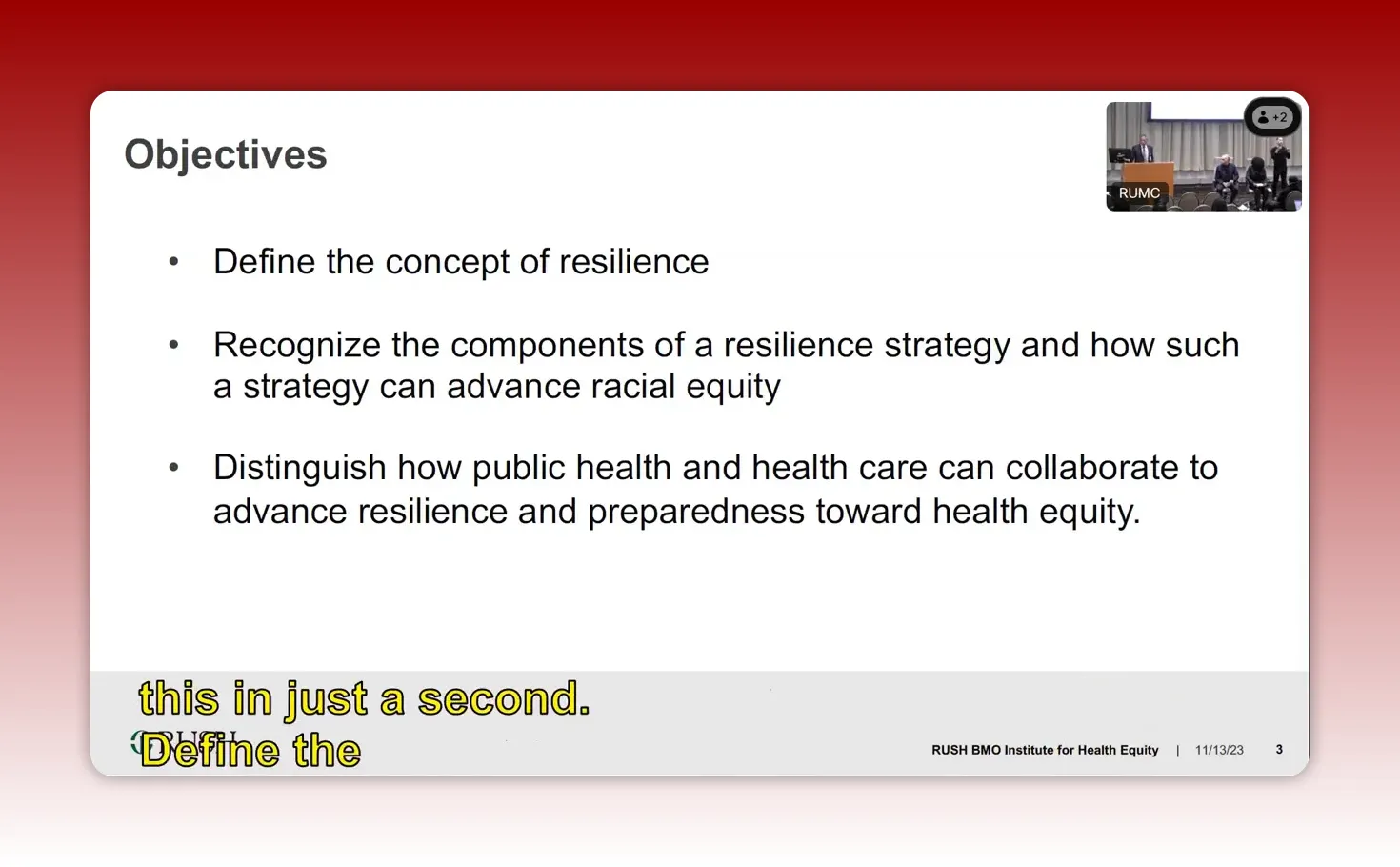
Why this matters: health equity, resilience, and who benefits
Health equity means everyone has a fair and just opportunity to be as healthy as possible. That requires removing obstacles such as poverty, discrimination, and lack of access to good jobs, quality education, housing, and healthcare. Preparedness and resilience are tools for maintaining and restoring health—but they only work if they are designed and measured with equity in mind.
If resilience planning excludes certain people or communities, the result is uneven recovery, wasted resources, and repeated harm. Equity-focused preparedness ensures that when systems are stressed—by a hurricane, a mass casualty event, a heat wave, or rising air pollution—the people most likely to be affected are considered in planning, decision-making, and resource allocation.
Core definitions that shape every decision
Resilience
I use two complementary definitions of resilience:
Outcome-focused: the ability of individuals, systems, or communities to maintain or quickly restore basic functions after disruption (sometimes called "bounce back").
Transformative resilience: the capacity to "bounce forward"—to use disruption as an opportunity to correct underlying inequities and change systems so the same harm is less likely to repeat.
Preparedness
Preparedness is the set of activities that create capabilities before an incident—planning, organizing, equipping, training, exercising, and evaluating. In emergency management I use a practical mnemonic: POETIC—plans, organization, equipment, training, exercising, and evaluation. Each element has to reflect the lived realities of the communities we aim to protect.
Public health approach to emergency management
Public health emergency management centers continuity of essential services and the needs of the most vulnerable people. It emphasizes prevention, surveillance, and community partnership as core functions, rather than only incident-driven response.
Principles for equity-centered preparedness and resilience
Across jurisdictions and sectors, I use a short list of non-negotiable principles:
Community leadership: Community members are context experts. They must drive needs assessment, priorities, and evaluation.
Relationship-first approach: Invest continuously in relationships with community-based organizations (CBOs), faith groups, and other trusted local actors.
Disaggregated metrics: Measure outcomes by race, income, disability status, age, and geography so inequities are visible and actionable.
Dual-use investments: Design preparedness resources and programs to serve everyday needs (e.g., violence, chronic disease) as well as extraordinary events.
Capacity building and sustainability: Fund and coach community partners to manage grants, data, and programs rather than delivering one-off services.
Practical framework: How to build an equity-centered resilience strategy
This is a scalable approach you can adapt whether you work for a hospital, public health department, city government, or nonprofit coalition.
Step 1: Map capabilities, partners, and vulnerabilities
Create an inventory of essential services, critical infrastructure, and community assets.
Identify populations at elevated risk (by neighborhood, language, disability, age, and occupation).
List trusted local organizations and informal networks that already provide support.
Step 2: Co-design priority objectives with communities
Instead of imposing goals, convene CBOs and resident leaders to define what resilience means for them. Examples include:
Ensuring uninterrupted dialysis access during civil unrest.
Providing culturally relevant mental health support after a mass trauma.
Reducing heat-related emergencies in neighborhoods with limited tree canopy.
Step 3: Build inclusive capabilities using POETIC
Plans: Draft plans that reflect the realities of those you serve (languages, literacy, mobility, cultural norms).
Organization: Define roles that include community partners in decision-making structures.
Equipment: Ensure accessibility: ramps, assistive technology, materials in multiple formats.
Training: Offer joint training sessions for institutional staff and community volunteers.
Exercising: Run drills that include nontraditional actors (e.g., laundromats, barbershops, faith leaders).
Evaluation: Use after-action reviews that incorporate community feedback and produce public, disaggregated reports.
Step 4: Operationalize coordination—"conductor" model
Emergency managers often act like conductors: they do not replace frontline providers but coordinate disparate players so resources align and gaps are identified quickly. Make clear operating procedures for:
Information sharing between hospitals, public health, social services, and law enforcement.
One intake form approach for survivors to prevent duplication and reduce administrative burden.
Shared dashboards and situation reports that go to a wide distribution list to create transparency and external accountability.
Step 5: Fund equity—contracting and workforce pathways
Where money flows determines who benefits. Use procurement and grantmaking strategically:
Set procurement goals for hiring local firms and minority-owned contractors for climate and resilience projects.
Make sure grant deliverables include capacity building (e.g., grant writing support, budgeting assistance).
Provide multi-year funding where possible to avoid short-term, unsustainable interventions.
Case examples that clarify the approach
1. Coordinating medical and human services after a mass casualty incident
In a large-scale incident the response is both clinical and human-centered. Key operational practices to adopt:
Establish a central coordination center for medical intelligence. Use it to track patients, blood supplies, surgical kits, and bed capacity across hospitals.
Embed federal and state victim assistance partners into local coordination to reduce fragmentation.
Create a unified family assistance center where survivors and relatives can access multiple services with a single intake form.
2. Repurposing resources to meet concurrent community needs
Large responses can unintentionally divert resources from other pressing community problems (for example, increased gun violence or disruption of dialysis services). A resilient system:
Monitors community indicators in real time and redeploys psychological, legal, and logistical supports where vulnerable populations are newly stressed.
Uses existing partnerships to rapidly deliver training and operational planning to facilities (for example, a freestanding dialysis center facing community violence).
3. Telehealth in remote and older adult populations
Telehealth expands access but only if implementation accounts for digital divides. Effective telehealth programs:
Pair clinicians with on-the-ground navigators who help patients schedule, connect, and participate in tele-appointments.
Create dedicated community spaces with simple equipment and staff support to host telehealth visits for elders or people without broadband.
Offer low-tech alternatives (phone-based services) when internet access is unreliable.
4. Long-term recovery and community voice after major disasters
Recovery is measured in years. To avoid leaving community organizations out of the long game:
Participate in VOADs (Voluntary Organizations Active in Disaster) but insist that local CBOs have seats at the table.
Track and publicize critical deadlines for survivors so people do not miss resources because of opaque processes.
Help build CBO capacity for grant management and strategic planning so they can take leadership in long-term recovery.
Concrete tools and templates
Situation report (one-page)
Use this structure to create a weekly typed update that can be shared with partners and funders:
Incident name / date / reporting period
Immediate needs (number and type)
Resources available (funding, housing, clinical teams)
Unmet needs and gaps (by neighborhood/demographic)
Actions requested (policy, funding, surge staffing)
Community partners engaged (names and roles)
One-intake intake form: essential fields
Full name and contact info
Primary language and communication needs
Basic clinical needs (e.g., currently hospitalized, dialysis dependent)
Immediate housing and food needs
Consent to share information among partner agencies
How to measure success: metrics that matter
Success means different things to different stakeholders. Here are practical measures that show whether equity-focused preparedness is working:
Process metrics
- Number of community partners compensated and engaged in planning.
- Percentage of contracts awarded to local minority-owned businesses.
- Number and frequency of joint exercises that include community actors.
Number of community partners compensated and engaged in planning.
Percentage of contracts awarded to local minority-owned businesses.
Number and frequency of joint exercises that include community actors.
Outcome metrics
- Time to reunify families in mass casualty events.
- Continuity of care for dialysis, mental health, and chronic disease services during incidents.
- Reduction in disparities for heat-related illness, asthma exacerbations, or other climate-sensitive conditions over time.
Time to reunify families in mass casualty events.
Continuity of care for dialysis, mental health, and chronic disease services during incidents.
Reduction in disparities for heat-related illness, asthma exacerbations, or other climate-sensitive conditions over time.
Feedback metrics
- Community satisfaction and perceived agency in decision-making.
- Qualitative assessments (focus groups, interviews) showing whether interventions respected local culture and priorities.
Community satisfaction and perceived agency in decision-making.
Qualitative assessments (focus groups, interviews) showing whether interventions respected local culture and priorities.
Common pitfalls and how to avoid them
These mistakes repeatedly undermine well-intended preparedness efforts:
Tokenism: Inviting community representatives to a single meeting but not involving them in decisions. Fix: pay partners, set clear roles, and include them in governance.
One-size-fits-all plans: Plans written without local input that fail when implemented. Fix: co-design plans and test them in exercises with local conditions in mind.
Short-term funding only: Grants that last months, not years, create cycles of dependency and burnout. Fix: pursue multi-year funding and fund the administration, not just programmatic activities.
Failing to disaggregate data: Aggregated metrics hide who is being left behind. Fix: require data broken down by race, language, disability, and neighborhood.
Deploying tech without human support: Telehealth or apps that lack navigators or low-tech alternatives exclude elders and people with limited digital skills. Fix: pair high-tech offerings with on-the-ground navigators and phone options.
Funding and procurement strategies that advance equity
How you allocate resources is a policy lever. Use these tactics to make funding do equity work:
Set equity criteria in all grant awards and procurement: Include local hiring, minority business participation, and community benefit as scoring criteria.
Pass-through grants: Provide funding directly to CBOs with simple reporting and capacity-building support.
Seed multi-year capacity grants: Small but reliable multi-year grants help organizations stabilize and plan for recovery work.
Use philanthropic partnerships: Convene donors to support gap areas (e.g., navigation staff, legal services) that public funding cannot easily cover.
Leadership behaviors that make equity-centered preparedness possible
Leaders set the tone. These behaviors are practical and replicable:
Listen until you understand: Make sustained listening—beyond a single meeting—part of every planning cycle.
Publish what you promise: Make plans and metrics public and report progress regularly.
Share power: Build co-leadership roles for community partners in steering committees.
Be willing to change: When local partners say a plan won’t work, adapt quickly and without defensiveness.
FAQ
How does a public health office include people with disabilities in emergency preparedness?
In practice this means building partnerships with disability commissions and advisory groups, ensuring accessibility in shelters and communication (multiple formats and languages), including disability representatives in drills, and adapting plans for non-evacuable populations such as dialysis patients. Co-develop evacuation and continuity-of-care protocols with disabled communities so solutions are workable and respectful.
How can small community-based organizations access federal or state disaster funding?
Look for programs that accept subgrants and partner with larger organizations that can administer funds. Advocate with local emergency management to include CBOs in VOAD meetings and situation reports. Provide grant-writing support and coaching, and push for pass-through funding models where public agencies distribute funds directly to community organizations.
What does “transformative resilience” look like in a climate project?
Transformative resilience links infrastructure or mitigation projects to local economic and social benefits: hire local residents for construction, contract with minority-owned firms, prioritize investments that address long-standing environmental injustices, and include community-led governance over project design and benefits. The goal is to change power and resource flows, not only physical risks.
Can telehealth really work in remote communities?
Yes—if paired with on-the-ground navigation and low-tech options. Successful programs provide local sites with hardware and staff to help patients connect, offer phone-based services when broadband is absent, and fund navigators who schedule and walk patients through visits. Telehealth should reduce barriers, not create new ones.
How do you keep community trust during long recovery processes?
Maintain regular, transparent communication; deliver on small, early wins; include community leaders in governance and decision-making; provide multi-year support; and fund organizations to provide both services and administrative capacity. Trust grows through predictable, respectful partnership over time.
Pitfalls to watch for when scaling equity efforts
Scaling quickly risks losing the local expertise that made pilots successful. When expanding programs, preserve:
Local leadership seats at decision tables
Budget lines for community navigators
Flexible contracting terms that accommodate small nonprofit cash flow realities
Key takeaways: what leaders should do this quarter
Audit your plans using an equity checklist: Are vulnerable populations explicitly named? Are accessibility and language needs addressed?
Start a situation report distribution list that includes nontraditional partners and philanthropic supporters.
Create or expand one pass-through grant to local organizations for capacity building and recovery work.
Design one exercise in the next six months that includes at least three community organizations and tests the unified intake process.
Set procurement goals for local hiring and minority business participation in climate and resilience projects.
Preparedness and resilience are not neutral. If we do not intentionally design them to advance racial and social justice, existing inequities will be reproduced—often more quickly—after a crisis. The steps above are practical, proven, and scalable: invest in relationships, center community expertise, and design systems that work for everyone, not just the most visible institutions.
As a final note, institutions that want to move from rhetoric to action should start by asking two questions at every stage: Who benefits from this decision? Who gets to be at the table making it? The answers will often point to straightforward changes in planning, procurement, and partnership that produce both better outcomes and stronger, more equitable communities.
Further reading and resources
Look for publicly available resilience strategies, VOAD guides, and equity checklists from public health associations. If you are starting locally, compile a one-page situational report template, an intake form, and a short list of community partners you commit to funding and supporting. These three items alone will make your next response measurably more equitable.
This article was created based on the video Speaker Series: Atyia Martin – Advancing Health Equity through Diversity, Preparedness + Resilience.


